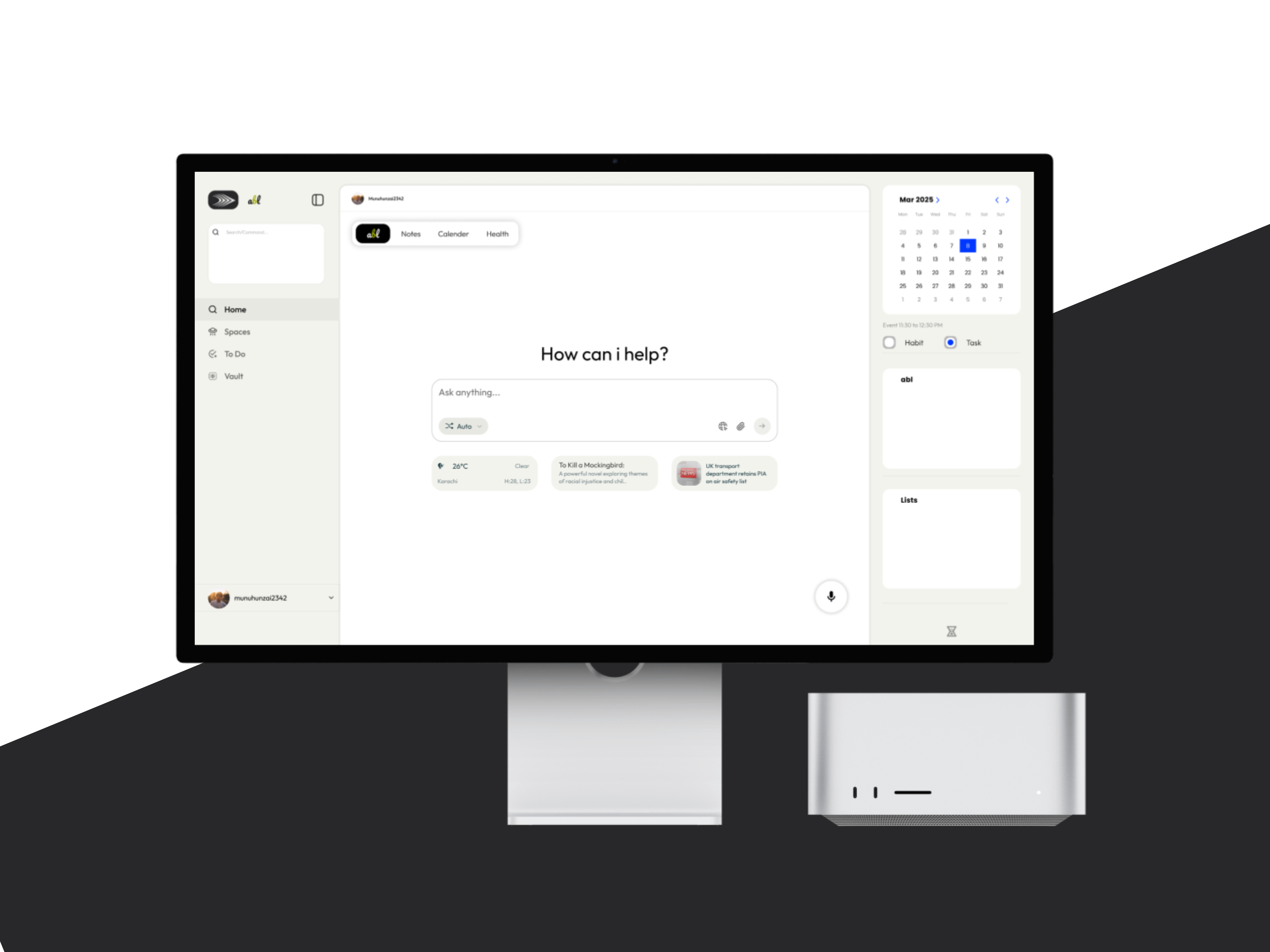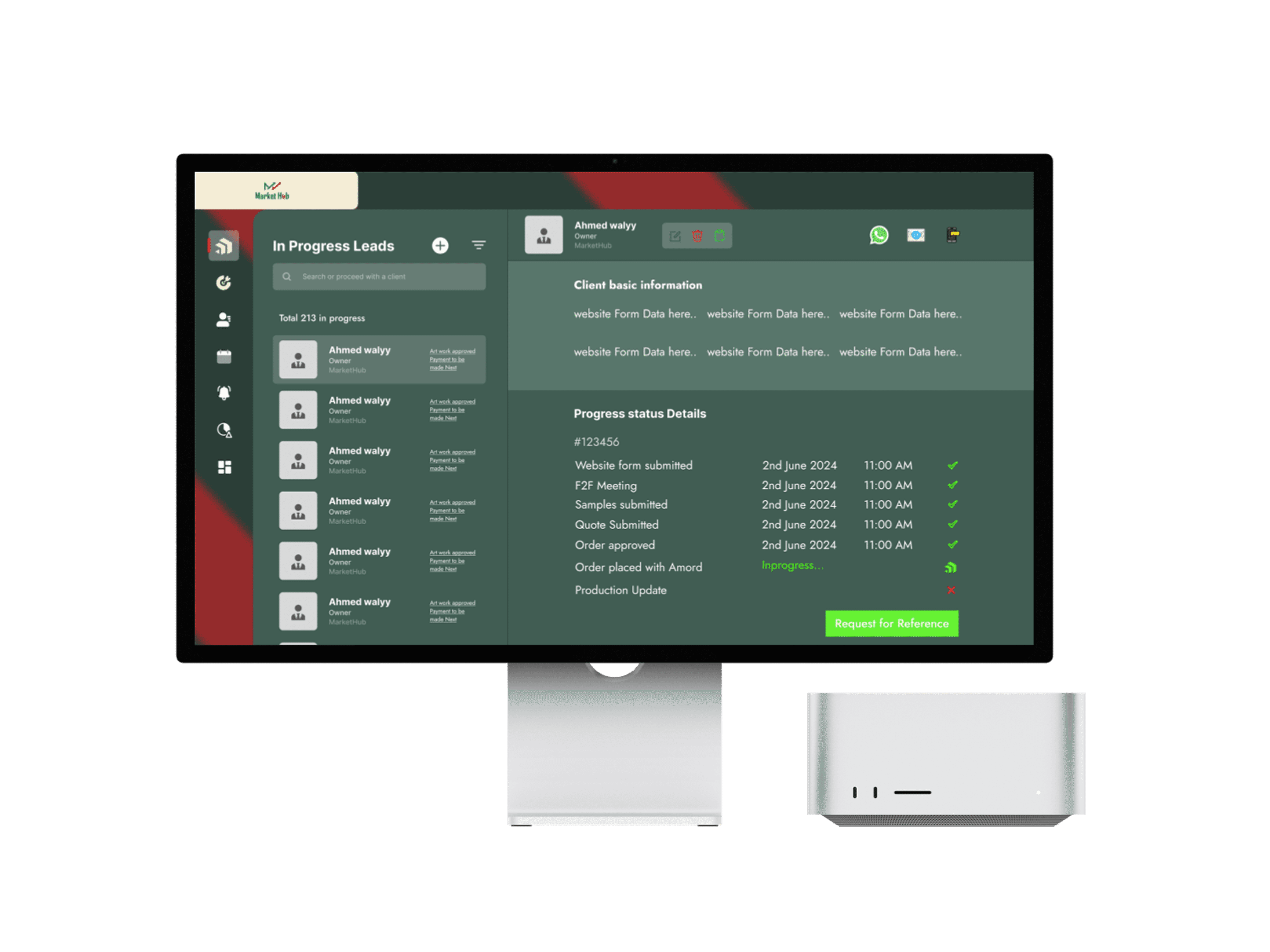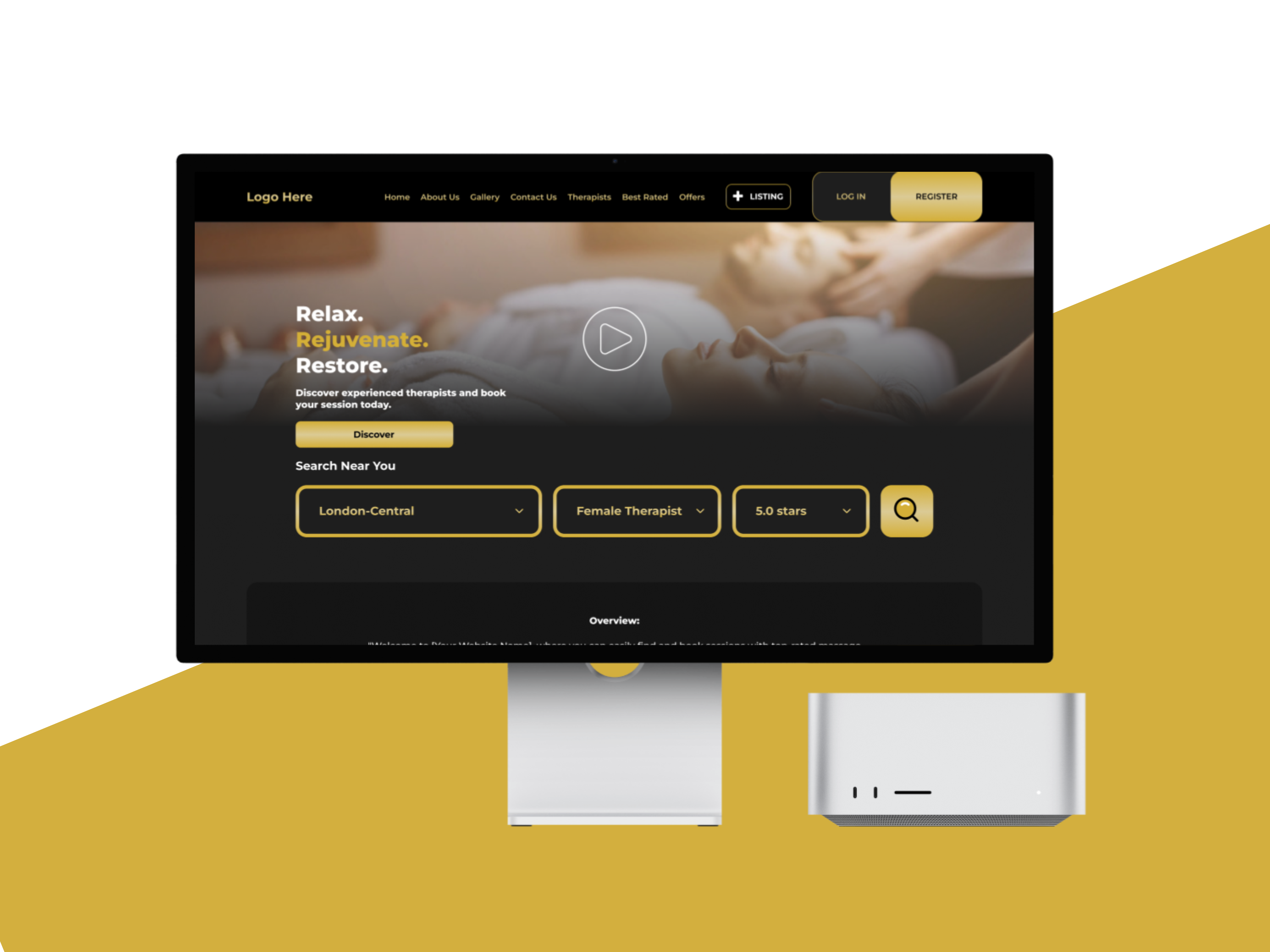
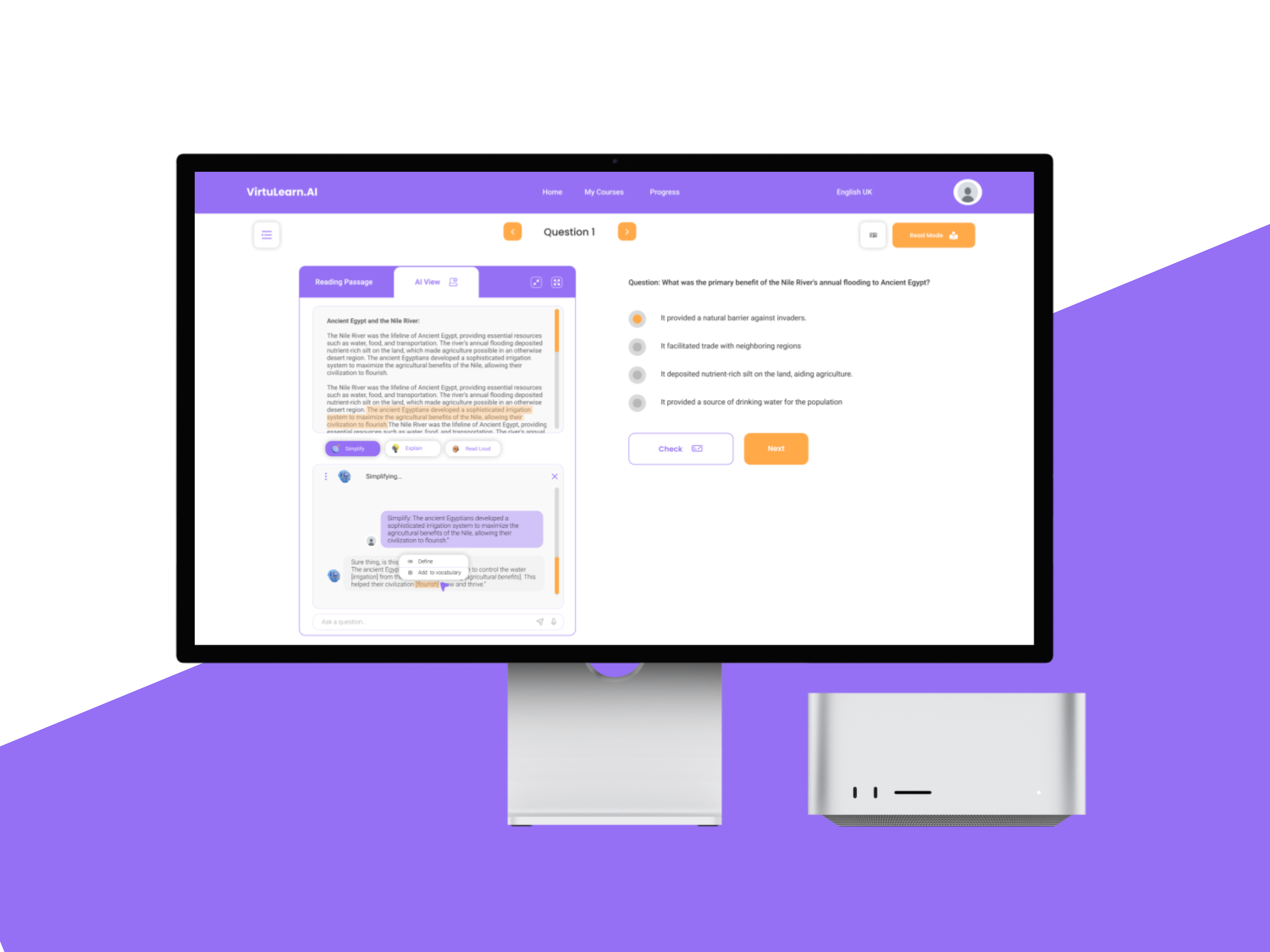

Project Description: This project involved the complete design of VirtueLearning.ai, an AI-powered learning companion that transforms passive study into active understanding. The focus was to design a smart, minimal, and intuitive interface where users could explore topics, answer AI-generated questions, and receive dynamic feedback and contextual learning support. The platform’s design emphasizes clarity, engagement, and flow — combining the intelligence of AI with the warmth of human-like interaction. The end result is a sleek and responsive web app that redefines how users learn, discuss, and retain knowledge through interactive AI conversations.
Process: The process began with researching AI learning models and analyzing how users interact with educational chat interfaces. Based on this, user flows were mapped for question answering, feedback display, and topic discussions. Wireframes were created to visualize the learning conversation flow and feedback structure. High-fidelity prototypes were then developed in Figma, using a clean color palette, smooth animations, and intuitive layouts to keep focus on interaction and comprehension. Usability testing ensured that the experience felt natural and supportive — encouraging curiosity and deeper engagement with each topic. Struggles: The main challenge was balancing AI sophistication with simplicity — ensuring that users felt guided rather than overwhelmed. Designing dynamic layouts that adapt to varied question types and real-time feedback required flexible structures and careful UX planning. Maintaining an academic yet approachable visual tone was also essential to make learning feel both intelligent and inviting.
Process:
The process began with researching AI learning models and analyzing how users interact with educational chat interfaces. Based on this, user flows were mapped for question answering, feedback display, and topic discussions.
Wireframes were created to visualize the learning conversation flow and feedback structure. High-fidelity prototypes were then developed in Figma, using a clean color palette, smooth animations, and intuitive layouts to keep focus on interaction and comprehension. Usability testing ensured that the experience felt natural and supportive — encouraging curiosity and deeper engagement with each topic.
Struggles:
The main challenge was balancing AI sophistication with simplicity — ensuring that users felt guided rather than overwhelmed. Designing dynamic layouts that adapt to varied question types and real-time feedback required flexible structures and careful UX planning. Maintaining an academic yet approachable visual tone was also essential to make learning feel both intelligent and inviting.