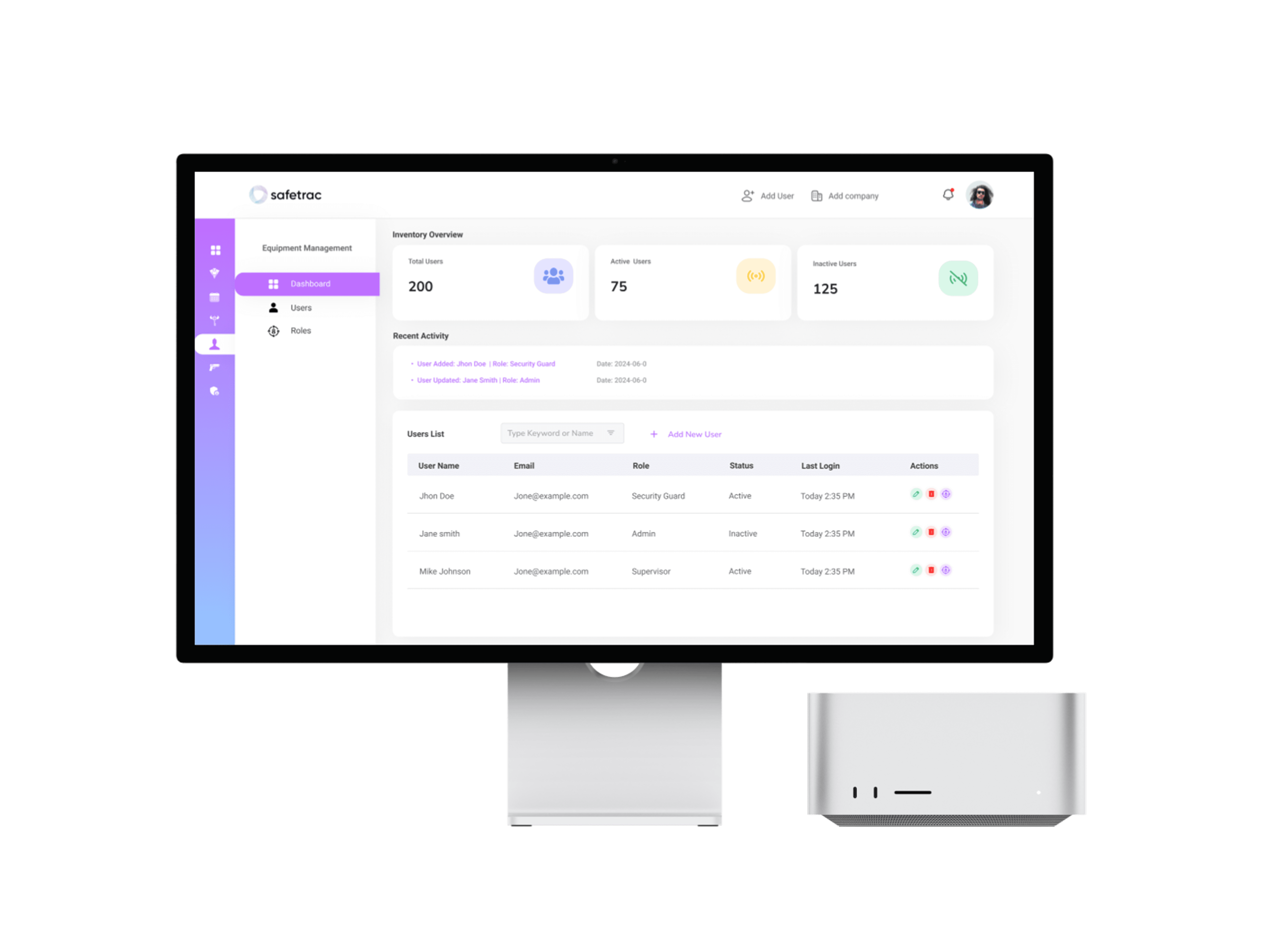
I started by conducting discussions with the client to understand their workflow. One challenge early on was that the client’s processes were undocumented, making it difficult to visualize how guards, schedules, and maintenance linked together. I mapped out their operations manually and identified three main user roles — Admin, Supervisor, and Guard — each with distinct priorities and permissions.
The biggest struggle came during the design of the maintenance and scheduling modules. The client wanted everything visible on one dashboard, which risked overloading users with too much data. Through several iterations, I simplified the layout using collapsible sections and alert highlights, ensuring the dashboard stayed clean without losing functionality.
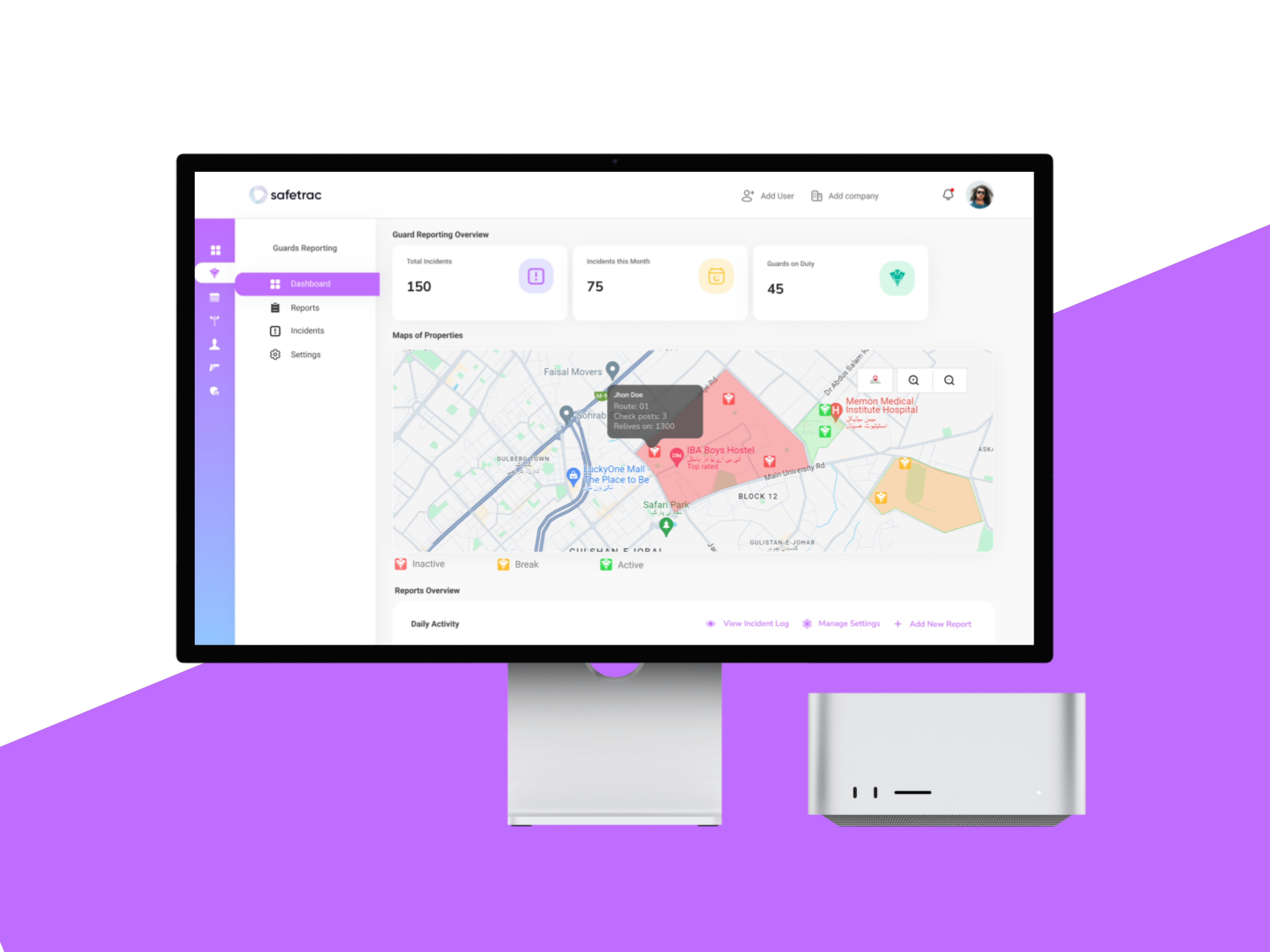
Process:
Wireframes were used to validate structure and navigation before moving to high-fidelity prototypes. During usability testing, I discovered users had difficulty understanding status indicators for equipment maintenance. I revised the visual hierarchy, adding clearer icons and color cues to make statuses intuitive.
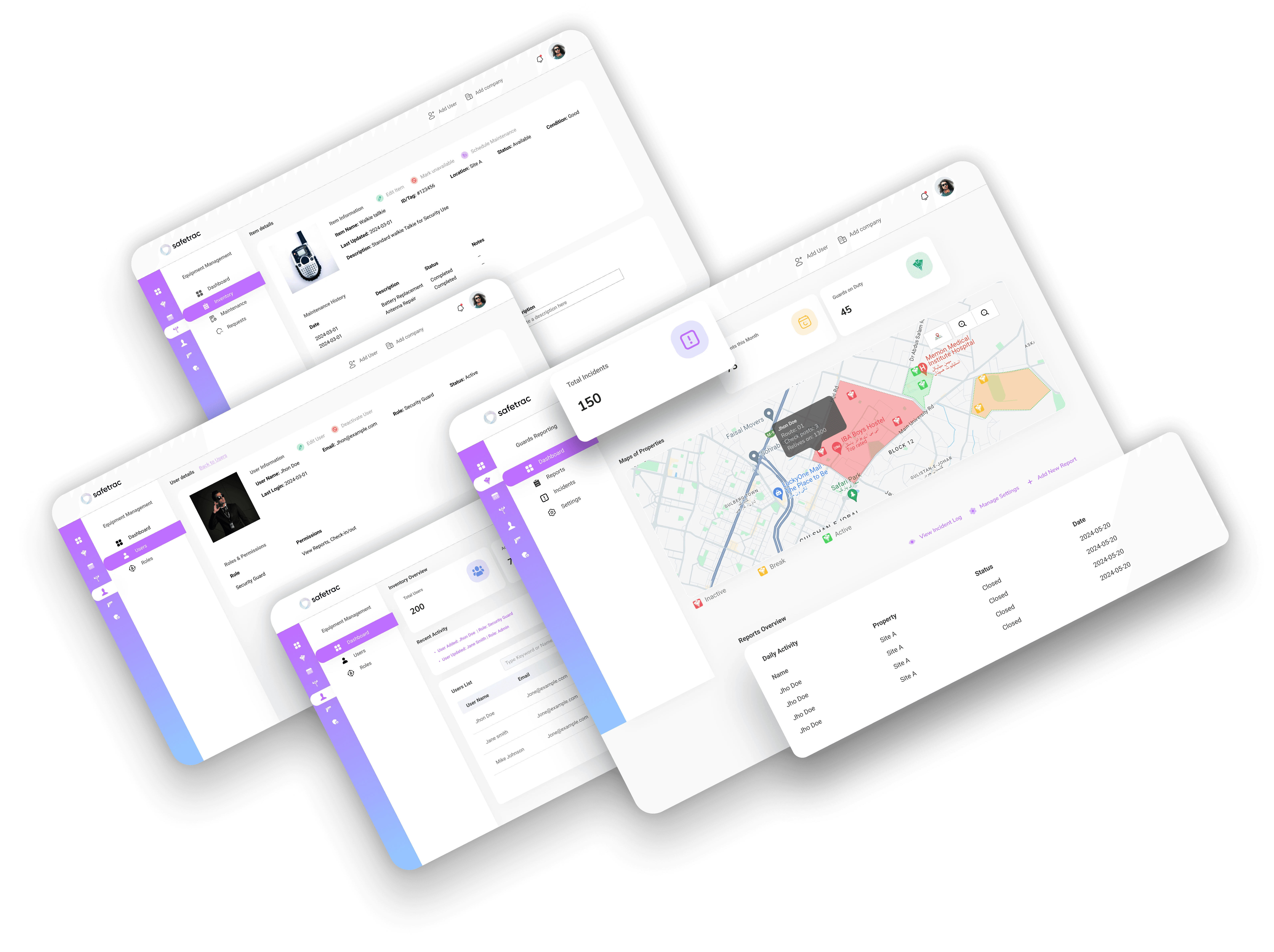
In the end, Saftrac allowed supervisors to create and update duty schedules quickly, track equipment maintenance history, and view guard performance in real time. Despite the initial complexity, the final product achieved a balance between detail and simplicity, helping the client streamline their daily operations and reduce coordination time significantly.